Artikels
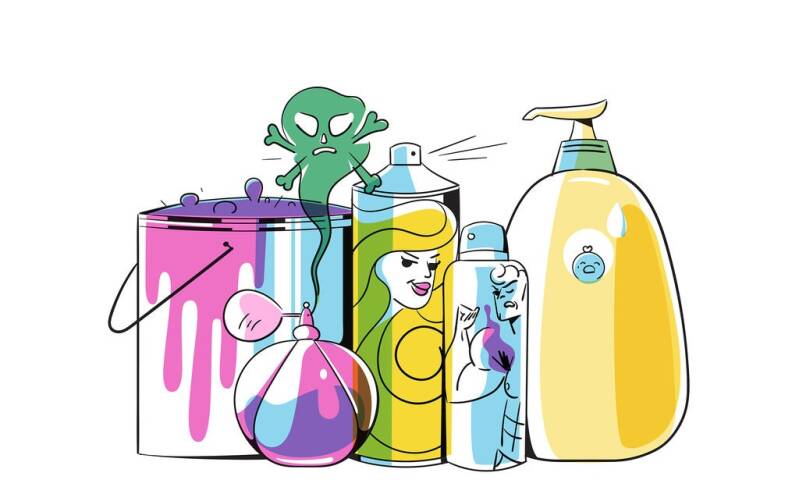
The deodorants, perfumes and soaps that keep us smelling good are fouling the air with a harmful type of pollution — at levels as high as emissions from today’s cars and trucks.
That’s the surprising finding of a study published Thursday in the journal Science. Researchers found that petroleum-based chemicals used in perfumes, paints and other consumer products can, taken together, emit as much air pollution in the form of volatile organic compounds, or V.O.C.s, as motor vehicles do.
The V.O.C.s interact with other particles in the air to create the building blocks of smog, namely ozone, which can trigger asthma and permanently scar the lungs, and another type of pollution known as PM2.5, fine particles that are linked to heart attacks, strokes and lung cancer.
Smog is generally associated with cars, but since the 1970s regulators have pushed automakers to invest in technologies that have substantially reduced V.O.C. emissions from automobiles. So the rising share of air pollution caused by things like pesticides and hair products is partly an effect of cars getting cleaner. But that breathing room has helped scientists see the invisible pollutants that arise from a spray of deodorant or a dollop of body lotion.
ADVERTISEMENT
The researchers said their study was inspired by earlier measurements of V.O.C.s in Los Angeles that showed concentrations of petroleum-based compounds at levels higher than could be predicted from fossil-fuel sources alone. Concentrations of ethanol, for example, were some five times higher than expected. And those levels were increasing over time.
“You can see these really rapid decreases in tailpipe emissions,” said Brian C. McDonald, a scientist at the Cooperative Institute for Research in Environmental Science at the University of Colorado, Boulder, who led the study. “It just made sense to start looking at other sources and seeing whether they could be growing in relative importance.”
Unlock more free articles.
Create an account or log in
While people use far more fuel, by weight, than they do lotions and paints, Dr. McDonald and his colleagues found a marked difference in how much of the pollutants from those products end up in the air.
Even though drivers can use gallons of gasoline each week, “it’s stored in an airtight tank, it’s burned for energy, and converted mostly to carbon dioxide,” said Jessica B. Gilman, a research chemist at the National Oceanic and Atmospheric Administration also involved in the study. Those carbon dioxide emissions are not smog-forming V.O.C.s, though they are a major driver of human-caused climate change.
“But these V.O.C.s that you use in everyday products — even though it may just be a teaspoon or a squirt or a spray — the majority of those kinds of compounds will ultimately end up in the atmosphere, where they can react and contribute to both harmful ozone formation and small-particle formation,” Dr. Gilman said.
ADVERTISEMENT
Forty percent of the chemicals added to consumer products wind up in the air, the researchers found.
To make their calculations, the study’s authors constructed a computer model that simulated air quality in Los Angeles, weaving in data from the chemical composition of consumer goods and tailpipe emissions. Using the model, they could see the fingerprints of the chemical compounds coming from personal care products and also estimate how many V.O.C.s from paints and finishes inside buildings were being released to the outside world. Roughly half of the V.O.C.s in Los Angeles air could be attributed to consumer products, the authors found.
Image
Air pollution in Los Angeles last year.
CreditFrederic J. Brown/Agence France-Presse — Getty Images
Ravi Ramalingam, who leads the California Air Resources Board’s consumer products and air quality efforts, said he was not surprised that paints and perfumes were making up a bigger share of emissions as cars and trucks became cleaner.
He said his agency was surveying the chemical makeup of about 300,000 consumer products sold or used in California, and preliminary results also suggested that emissions from those products were higher than previously estimated, though by a lesser amount than Dr. McDonald and his colleagues found. He said their different methodologies likely accounted for the disparity.
“We’re still looking for opportunities to reduce emissions from consumer products,” Mr. Ramalingam added.
California has regulated emissions from consumer products since the late 1980s, and federal regulations have followed suit, setting V.O.C. emissions limits for a range of items, including paints, varnishes and lacquers.
ADVERTISEMENT
Concerned consumers may be tempted to turn to “natural” products, though the researchers say that isn’t a cure-all. For example, one class of compounds called terpenes gives many cleaning products a pine or citrus smell. These terpenes can be produced synthetically, or naturally from oranges.
“But whether it’s synthetic or natural, once it gets into the atmosphere it’s incredibly reactive,” Dr. Gilman said. Similar natural compounds give the Blue Ridge Mountains in Appalachia their name, from the blue haze formed by terpenes emitted from the trees there, Dr. Gilman added.
[Also read: “What Makes the Blue Ridge Mountains Blue,” a Times article from 1964]
Galina Churkina, a research fellow at the Yale School of Forestry and Environmental Studies who was not involved in the study, noted that the study did not consider emissions related to biological sources like trees and animals. But the authors said their study was not the end of this line of research.
There are tens of thousands of chemicals in consumer products, and researchers have not yet pinpointed which chemicals are most likely to form ozone or PM2.5 particles. “One of the things that we’re hoping the public takes away from this is that our energy sources and the consumer products we use every day are continually changing the composition of our atmosphere,” Dr. Gilman said.
Notably, some of the V.O.C.s used in consumer products were replacements for chlorofluorocarbons, or CFCs. Those chemicals were phased out beginning in the 1980s because they thinned the Earth’s ozone layer.
For consumers looking for a greener solution, Dr. McDonald offered some advice. “Use as little of the product as you can to get the job done,” he said.
Wil je wat bijdragen tegen klimaatverandering? Een van de makkelijkste dingen die je kunt doen is stoppen met het gebruiken van geparfumeerde producten (deo, allesreiniger, wasmiddel, shampoo), ja en dat geldt net zo goed voor bio of natuurlijke geuren. Dit artikel van de New York Times legt uit hoe dat zit.
De overstap naar parfumvrij leven is eigenlijk super makkelijk, bijna alles kun je ook parfum vrij krijgen bij de supermarkt en drogist. Daarmee help je niet alleen de planeet enorm maar het maakt het leven van astma, mcs en migraine patienten ook een stuk leefbaarder. Een betere wereld voor iedereen begint bij onze dagelijkse gewoonten!
Voor ons onderzoek naar cosmetische producten bellen we met journalist en publicist Robin van Wechem. Zij is schrijver van Het Antirimpelcomplex. In dit boek verdiept Robin zich in de achterkant van de cosmetica-industrie. Wat zit er precies in de vele cosmetica-artikelen die wij op grote schaal gebruiken? En, wat klopt er van de mooie beloftes waarmee deze producten worden aangeprezen? Naar aanleiding van haar bevindingen maakt Robin zich zorgen over de inhoud van veel artikelen.
‘Vooral de hoeveelheid plastics en andere chemicaliën die in de producten wordt verwerkt is schrikbarend. Ik ben op een beurs geweest van grondstoffen voor de cosmetica-industrie. Daar waren alle chemiereuzen zoals BASF, Bayer, Shell en Merck prominent aanwezig. Dat zegt eigenlijk al genoeg over de belangrijkste bestanddelen in cosmetica.’
De cosmetische industrie is dus vooral een chemische industrie. Volgens de Nederlandse Cosmetica Vereniging bevat een gemiddeld product tussen de tien en vijftig verschillende bestanddelen. Maar een complex parfum kan wel tot 170 verschillende bestanddelen hebben.
Vliegtuigbrandstof en aluminium
In veel deodorant zit aluminium verwerkt, volgens Van Wechem bevatten sommigen producten tot wel dertig procent van dit metaal. Daarnaast onderscheidt ze nog synthetische ingrediënten; aardoliederivaten zoals vliegtuigbrandstof die worden herbewerkt tot cosmetica-ingrediënt. En dan heb je nog de weekmakers of zogeheten ftalaten die ook in speelgoed en voedselverpakking kunnen zitten.
‘Ftalaten zitten in synthetische parfum, om de geur te ‘fixeren’. Sommige ftalaten zijn in verband gebracht met hormoonverstoring, maar veel andere varianten zijn nog niet goed onderzocht. In cosmetica zijn sommige ftalaten verboden. Dat betekent alleen niet dat de varianten die nog wel mogen worden gebruikt, automatisch veilig zijn.’
Water en zeep
De meeste producten bevatten overigens een grondstof die op het eerste oog onschuldig lijkt: water.
Van Wechem: ‘Maar om te zorgen dat schimmels en bacteriën daar geen vat op krijgen, worden er conserveringsmiddelen aan toegevoegd. En dat zijn agressieve stoffen. Andere stoffen kennen we uit allesreiniger zoals sodiumlaurylsulfaat (SLS) en sodiumlaurethsulfaat (SLES). Vooral de eerste zitten in allesreiniger maar ook, in lagere concentraties, in douchegel en shampoo.’
Schoner of viezer?
In onze behoefte om schoner, gladder en mooier te worden smeren we dus allerlei chemische middelen op ons lichaam. Maken we onszelf ziek met al deze middelen? Volgens Van Wechem ligt dat vooral aan de hoeveelheid die we gebruiken. En daar zit een addertje onder het gras. Per product zijn de percentages van de afzonderlijke bestanddelen misschien wel toelaatbaar, maar wat het effect is van al die middelen tezamen is onduidelijk.
‘Consumenten gebruiken soms wel tien verschillende producten per dag van zeep en shampoo tot tandpasta, deodorant en make-up. Er wordt wel rekening gehouden met de mogelijke effecten van deze optelsom op basis van schattingen. Maar we weten nog nagenoeg niks over de manier waarop de verschillende stoffen in het product (elk cosmeticaproduct is een mengsel van allerlei verschillende stoffen) op elkaar reageren en wat de blootstelling aan die mengsels met huid en gezondheid doet.’
Wij van WC-eend
Hoe zit het dan met de controle op al deze producten? Het toelatingsbeleid voor cosmetica-ingrediënten is in Europa strenger dan in Amerika, waar de regulering vooral aan de markt wordt overgelaten. Europa heeft een expertpanel dat cosmetica-ingrediënten beoordeelt voordat ze op de markt mogen komen. Dit Wetenschappelijk Comité van Consumentenproducten, het SCCS, zorgt ook later weer voor een herbeoordeling van de producten.
‘Probleem daarbij is dat dit comité afhankelijk is van de onderzoeken en dossiers die door de industrie zelf worden aangeleverd,’ zegt Van Wechem. ‘Het expertpanel doet zelf geen onderzoek naar ingrediënten en de concentratie waarin ze worden gebruikt in een product. Wat betreft de handhaving is in ons land de Nederlandse Voedsel- en Waren Autoriteit verantwoordelijk, maar daarvan is algemeen bekend dat die veel te weinig capaciteit heeft, dus beperkt die zich ook op dit dossier tot een sporadische steekproef.’
Diffuseurs électriques de parfums d’ambiance, désodorisants et produits anti-moustiques
Les diffuseurs électriques font l’objet d’un certain engouement auprès des consommateurs. Compte tenu de leurs caractéristiques – notamment du fait de l’utilisation de liquides pour leur fonctionnement – ils peuvent toutefois présenter des risques. Afin de s’assurer de leur conformité, la DGCCRF a vérifié 184 références. Cette enquête a mis en évidence la présence sur le marché de produits dangereux ainsi qu’une méconnaissance par les professionnels des différentes règlementations applicables.
Commercialisés pour parfumer, désodoriser, tuer ou faire fuir les insectes, les diffuseurs électriques agissent par micro-diffusion, ventilation, échauffement ou brumisation et sont branchés directement sur secteur ou par un câble d’alimentation.
Les risques identifiés et défauts de conformité potentiels sont les suivants : risque de choc électrique, risque toxique ou de départ de feu, présence de substances chimiques interdites, défaut ou non-conformité d’informations relatives à la sécurité ou aux dangers liés aux substances et absence ou non-conformité des marquages obligatoires. Du fait des risques particuliers qu’ils présentent, les diffuseurs fonctionnant par chauffage ont été ciblés prioritairement.
Les contrôles se sont déroulés auprès des responsables de la première mise sur le marché national (RPMM) et auprès des distributeurs (hypermarchés alimentaires, magasins spécialisés en bricolage, solderies, jardineries, quincailleries et petits magasins d’esthétique et de beauté).
Des produits relevant de plusieurs obligations réglementaires
Les diffuseurs électriques, appelés à être branchés sur le secteur, relèvent de la réglementation sur les produits électriques destinés à être employés dans certaines limites de tension.
Les produits contenus dans ces diffuseurs et destinés à être diffusés relèvent des règlementations applicables aux produits chimiquees dernières prévoient notamment des restrictions d’utilisation de certaines substances et des dispositions relatives à l’information du consommateur sur les dangers que peuvent présenter les produits diffusés.
Les produits insecticides et répulsifs d’insectes répondent enfin à la définition d’un produit biocide[4] et doivent à ce titre répondre aux exigences de la règlementation applicable à ce type de produits, notamment en ce qui concerne les règles d’étiquetage.
Des articles non-conformes et susceptibles d’être dangereux
26 produits ont été prélevés :
- 24 vaporisateurs ont été testés pour en vérifier la sécurité électrique : 22 ont été déclarés non-conformes, dont 2 non-conformes et dangereux en raison d’un risque de choc électrique ;
- 18 échantillons (produits à diffuser) ont fait l’objet de vérifications des règles applicables aux produits chimiques : 14 ont été déclarés non-conformes.
Le taux global de non-conformité est de 92% (taux très élevé en raison du ciblage des produits par les enquêteurs, qui n’est donc pas représentatif du taux de non-conformité du marché).
Les principaux manquements relevés sont les suivants :
- Sur les aspects relatifs à la sécurité électrique du produit[5] : des anomalies de marquage et l’absence d’avertissements de sécurité dans la notice ou sur l’emballage, notamment des recommandations relatives à l’utilisation ou des informations sur les risques encourus par les enfants, une isolation électrique insuffisante entraînant un échauffement excessif et des anomalies de construction.
D’autres manquements ont été constatés sur des transformateurs utilisés pour 5 diffuseurs, notamment l’absence de symboles et marquages prévus et l’absence d’indication de remplacement du câble et d’informations sur l’indice de protection du produit contre l’eau. Les diffuseurs de leur côté ne comportaient pas d’instruction sur l’obligation d’utiliser l’appareil sous très basse tension de sécurité et nécessairement avec l’alimentation correspondante. L’éventualité de départ de feu n’a pas été mise en évidence. - Sur l’application des dispositions des règlementations applicables aux substances et mélanges dangereux et aux produits biocides : certains produits ne répondaient pas aux dispositions du règlement CLP[6] (absence de mentions d’avertissement[7] informant le consommateur sur les dangers que présente le produit ou absence de fermeture à l’épreuve des enfants notamment) et d’autres présentaient un étiquetage non-conforme à la règlementation biocide (absence de mentions relatives aux substances actives notamment).
Des retraits du marché, des destructions de stock et des remises en conformité des produits non-conformes ont été effectués par les opérateurs. Les produits non-conformes et dangereux ont fait l’objet de mesures de retrait, de rappel, ou de mise en conformité de leur conception. Deux avertissements et une mesure de police administrative ont été adressés aux professionnels et un procès-verbal a été transmis au Parquet.
Devant le taux élevé de non-conformité des prélèvements et la méconnaissance des différentes réglementations de la part de certains opérateurs, la DGCCRF continuera à opérer des contrôles dans ce secteur où les articles commercialisés peuvent revêtir un risque pour la santé humaine et pour l’environnement.
Dermatoloog UMC: ‘Stel kinderen niet bloot aan parfums en conserveermiddelen’
Uit ons onderzoek naar Cosmetische producten komen we terecht bij dermatoloog Thomas Rustemeyer. In zijn spreekkamer in het Amsterdam UMC ziet hij dagelijks de minder leuke gevolgen van ons massale cosmeticagebruik. ‘In cosmetica zitten veel stoffen die een allergische reactie kunnen veroorzaken.’
Vandaag heeft dermatoloog Thomas Rustemeyer een patiënte van rond de veertig op bezoek die hevige reacties rond haar mond krijgt op vrijwel alle cosmetica die ze gebruikt. ‘Ik dacht altijd dat ik een berenhuid had,’ vertelt ze. ‘Maar sinds een paar jaar is het helemaal mis. Lippenstift bijvoorbeeld, of tandpasta. Ik heb allerlei tandpasta’s geprobeerd, maar er is er niet één waar ik niet op reageer. Mijn mondhoeken scheuren helemaal. Dus ik poets al ruim 2 jaar met zout.’ De allergie is ingrijpend voor deze patiënte: ‘Als ik weer een reactie heb, dan zie ik er niet uit. Dan zit ik ‘s morgens te huilen dat ik zo toch niet naar mijn werk kan.’ Aan Rustemeyer de taak om erachter te komen waar deze patiënte exact allergisch voor is, zodat ze op zoek kan naar een product waar ze wel tegen kan.
Cosmetica goed voor mensen in kwetsbare positie
Ondanks de heftige casussen die hij tegenkomt, is dermatoloog Rustemeyer zeker niet tegen het gebruik van cosmetica. Rustemeyer: ‘Cosmetica zijn aantoonbaar goed voor mensen in een kwetsbare positie. Ouderen bijvoorbeeld, die voelen zich beter. Of kankerpatiënten: zij leven langer en hebben een prettiger leven als ze er goed uitzien en zich daardoor beter voelen.’ De dermatoloog meent wel dat de samenstelling van cosmetica zo moet zijn dat consumenten niet onnodig risico’s lopen. Daarvoor hebben we regels, legt hij uit: ‘Die regelgeving wordt alleen wel aangepast op basis van nieuwe kennis. Dat is kennis die dus pas ontstaat op het moment dat mensen klachten hebben gemeld.’
Wat voor klachten hebben we het dan over? Hoe ontstaat zo’n allergie eigenlijk? Rustemeyer: ‘Een allergie is een overgevoeligheidsreactie van ons afweersysteem. Dat afweersysteem hebben we nodig om ons te beschermen tegen kanker, bacteriën, schimmels en parasieten. Bij een allergie wordt een stofje dat eigenlijk onschadelijk is, door het afweersysteem opgemerkt als gevaarlijk. En dan zal dit systeem bij contact met dit stofje een ontstekingsreactie induceren. Dat geeft bij contactallergie meestal een eczemateuze reactie, dus een uitslag.’
Maak jouw eigen website met JouwWeb